

Yoga: Coming Home to Ourselves
Looking to heal your inner child? Try yoga.
I never thought I would do yoga.
For one, yoga reminded me of how we sat cross-legged as kids, fingers pinched together and chanting “Om.” (Big cringe.)
It also conjured the image of thin, legging-clad women walking the upper echelon streets of Santa Monica with yoga mats slung over their shoulders. In my baggy clothing, clutching my hand-me-down fanny pack, I couldn’t possibly fit in that picture.
“There are studies showing the effectiveness of practices like yoga for mental health. Eastern cultures know what they’re doing. You should try it,” my therapist said, for the third session in a row.
Desperation leads to interesting choices. My mind felt broken and I needed a new modality to heal my mind.
And so, I finally gave yoga a try.
It began with a pool party.
Or rather, a rooftop yoga class, backed by the soundtrack of the pool party around the corner. The blaring music negated the calm and quiet that my friend and I had hoped for. We experienced more healing over our lunch of Ethiopian food.
Although I was excited to report back to my therapist, my mind was still unhealed, reeling with anxious thoughts while my body continued to unpredictably see-saw from sluggish to restless.
Cynicism in high gear, I was wary of attending another class. But there was still curiosity there, and oddly enough, declining a second invitation was what spurred me into action.
I was going to learn yoga, but on my own terms–from my living room, watching YouTube videos.
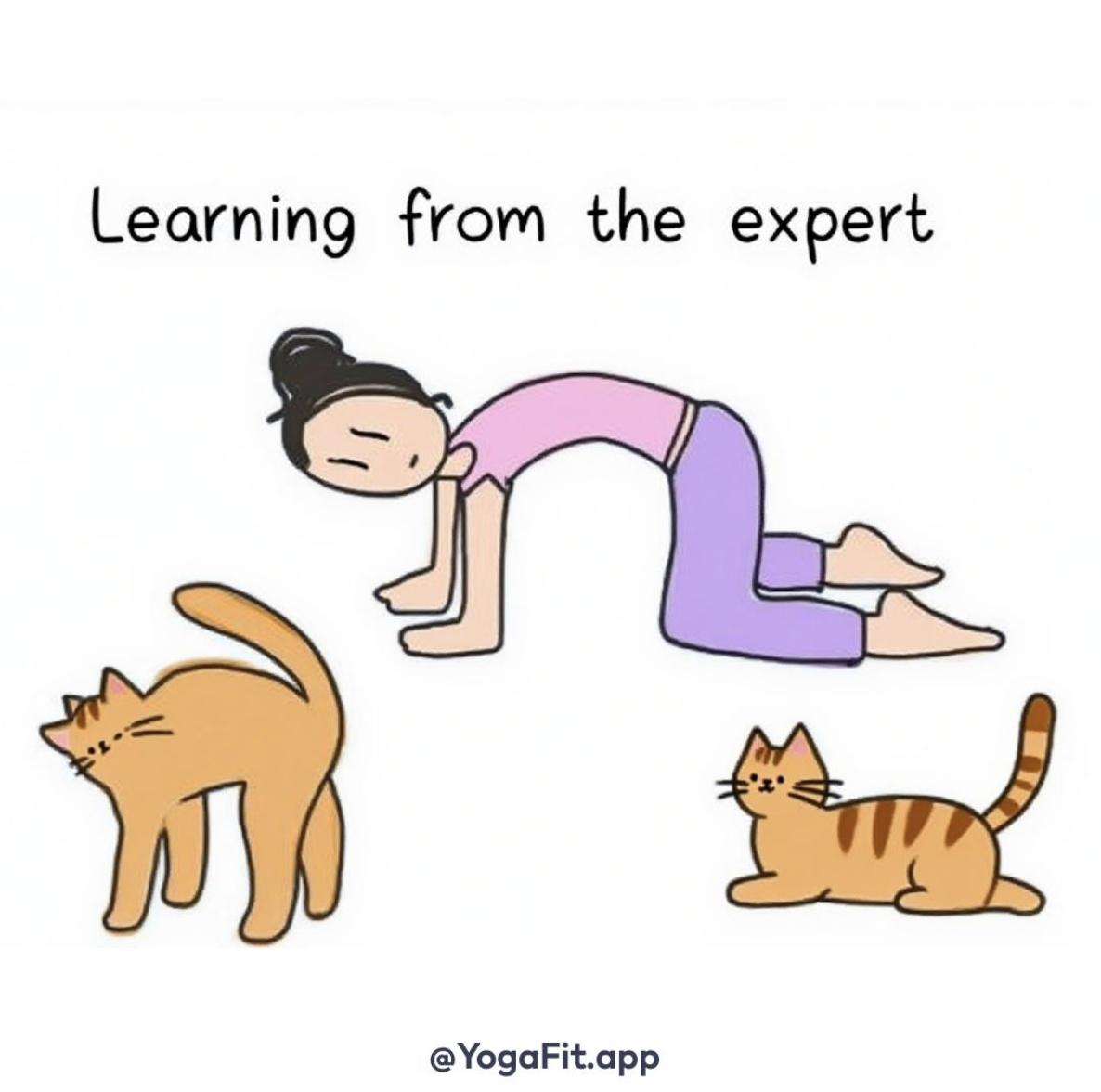
Building Self-Trust
They say that when you don’t go through with the things you commit to, your self-trust diminishes. By that definition, I had very little self-trust especially when it came to exercising, cutting back on sugar, and being nice to myself.
Even if I started yoga, would I be able to keep up with it?
Somehow, yoga broke free from a history of broken promises. Desperation was part of that, yes, but it was also because I allowed myself to simplify and do things in a way that suited me.
What didn’t work:
Rooftop yoga classes.
Tight clothes.
Willing myself to have the energy to go out and be around people.
What worked:
Following yoga flows on YouTube. No fit check, no commute, and no people = no pressure.
Doing it at the same time everyday.
Habit stacking: daily morning routine = brush teeth, feed cats, do yoga.
Limiting my options: sticking to just 3 practitioners/channels.
By simplifying, I was able to do yoga 5+ days in a week.
And my self-trust was growing. I actually felt it most on the days when I didn’t do yoga. Where the anxiety and guilt usually reigned was now a calm confidence. I trusted that I would get back into it the next day because I now had a history of doing yoga regularly.
Anyone who has experienced depression with a side of anxiety knows that bed is a haven, and the rest of the world can feel too big, too demanding, and too much. Dreading the day ahead was the norm for me.
But yoga changed that.
Yoga and Mental Health
According to Satvic Yoga, my chakras were very blocked.
In South Asian culture, human bodies contain 7 main chakras, or energy centers, which govern different aspects of our lives. When these chakras are blocked, these areas become unstable.
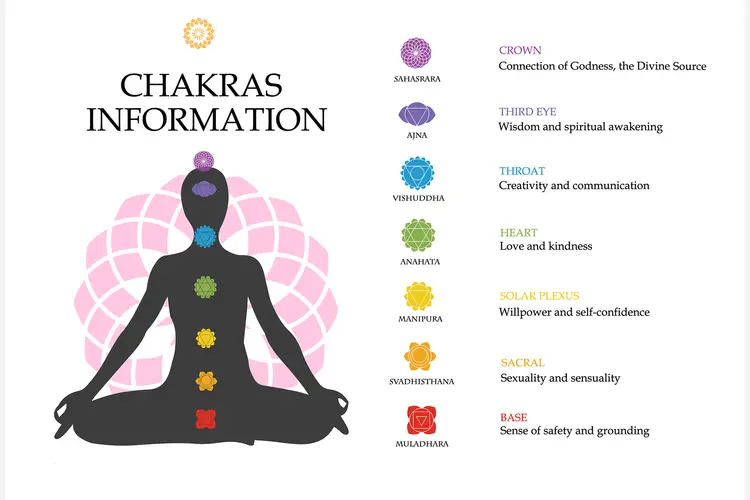
Image courtesy of WebMD
For example, if the mudlahara chakra is blocked, one may experience lower body pain and the inability to keep a routine. The symptoms of a blocked manipura chakra can include ulcers and a lack of motivation.
But unblocking your chakra isn’t the only way yoga contributes to better mental health.
Moving your body
For people experiencing depressive symptoms, exercise is a pipe dream. We know it’s good for us, but moving our bodies is often the last thing we want to do.
However, the more I did yoga, the more my body craved movement. In my 30s, it feels like tension is the default state. Yoga motivated me to get out of bed and work towards a state of relaxation and strength.
Breathing
What do you do when you have a panic attack? Hyperventilate. What do people tell you when you are having a big cry or when you’re angry? “Take a deep breath.”
Your body knows what it needs. Deep breaths are highly recommended by mental health professionals, but despite our best intentions, it can be hard to incorporate even a single deep breath into our daily routine.
But pair it with motion and it gets a whole lot easier. In yoga, movement and breathing are inseparable and most poses either flow through a breath cycle or are held for a few cycles.
Stillness
The joy and significance of savasana, or corpse pose, cannot be underestimated.
Savasana is a standard way to end a yoga flow. Lying on your back after a series of active poses allows your body to cool down and rest.
It’s also a reminder to intentionally incorporate rest into our routines. After moving, rest. And when the world is moving too fast, be still. We have the power to ground ourselves.
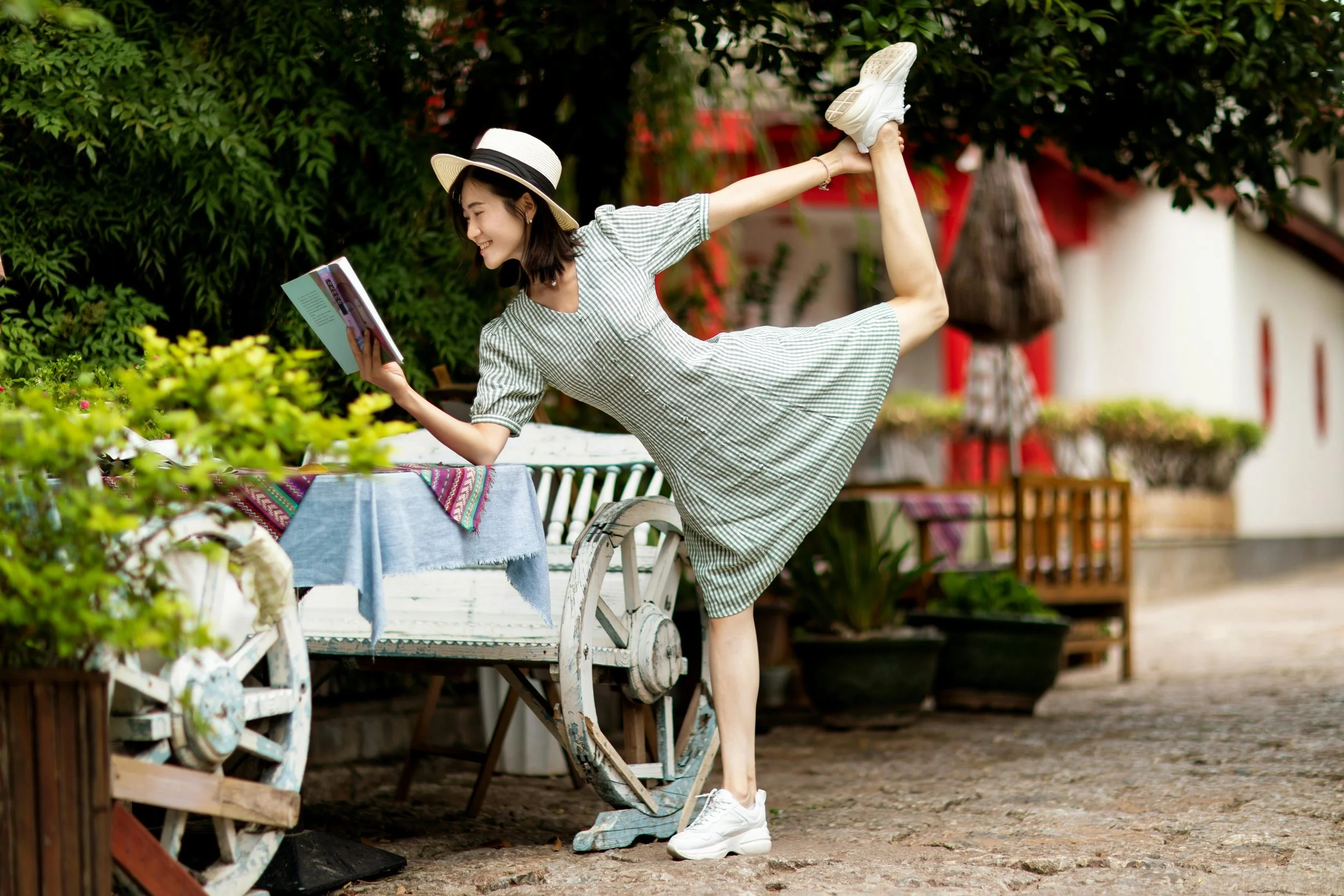
Image courtesy of Ray Lei
All You Need Are Pajamas
As a musician, I often hear others say, “I wish I had taken piano lessons.” And I always reply, “it’s never too late to start!”
But starting is often the hardest part. How or where do we start? What do we need and what’s the first thing we should do?
Here are some ideas on how to start:
Buy yoga clothes and a mat. You can do yoga in your pajamas, but sometimes the right clothes (and looking great) can give you momentum.
Check out this list of companies making eco-friendly yoga mats, including handwoven mats from India and mats made from natural rubber.
Looking for activewear that doesn’t sacrifice style for function? Check out POPFLEX by Cassey Ho.
Find a virtual class. Whether it’s YouTube or a virtual class offered by a yoga studio, you can start in the comfort of your home. This is a great, low- to no pressure way to start.
Go to a yoga class. Even if it didn’t work out for me, you might thrive in in-person classes. Check out what’s offered at your local gym or ClassPass.
Flow with a friend. There are probably more people around you who are doing yoga than you think.
There are several different types of yoga, four of which are explained here. Beginner friendly options include:
Hatha: Known for its slower pace, focus on basic poses, and holding poses for several breath cycles (one cycle = inhale/exhale).
Vinyasa: Beginning level vinyasa will have you flowing faster than Hatha, with a greater variety of poses that are synced with breathing. Vinyasa opens the door to more rigorous and energetic practices, such as Ashtanga or power flow, giving you more options as you build strength and flexibility.
Yin Yoga: Slower than Hatha and Vinyasa, yin yoga is focused on relaxation and includes many passive floor poses. Great for a bedtime routine as holding each pose for several minutes can create a meditative state.
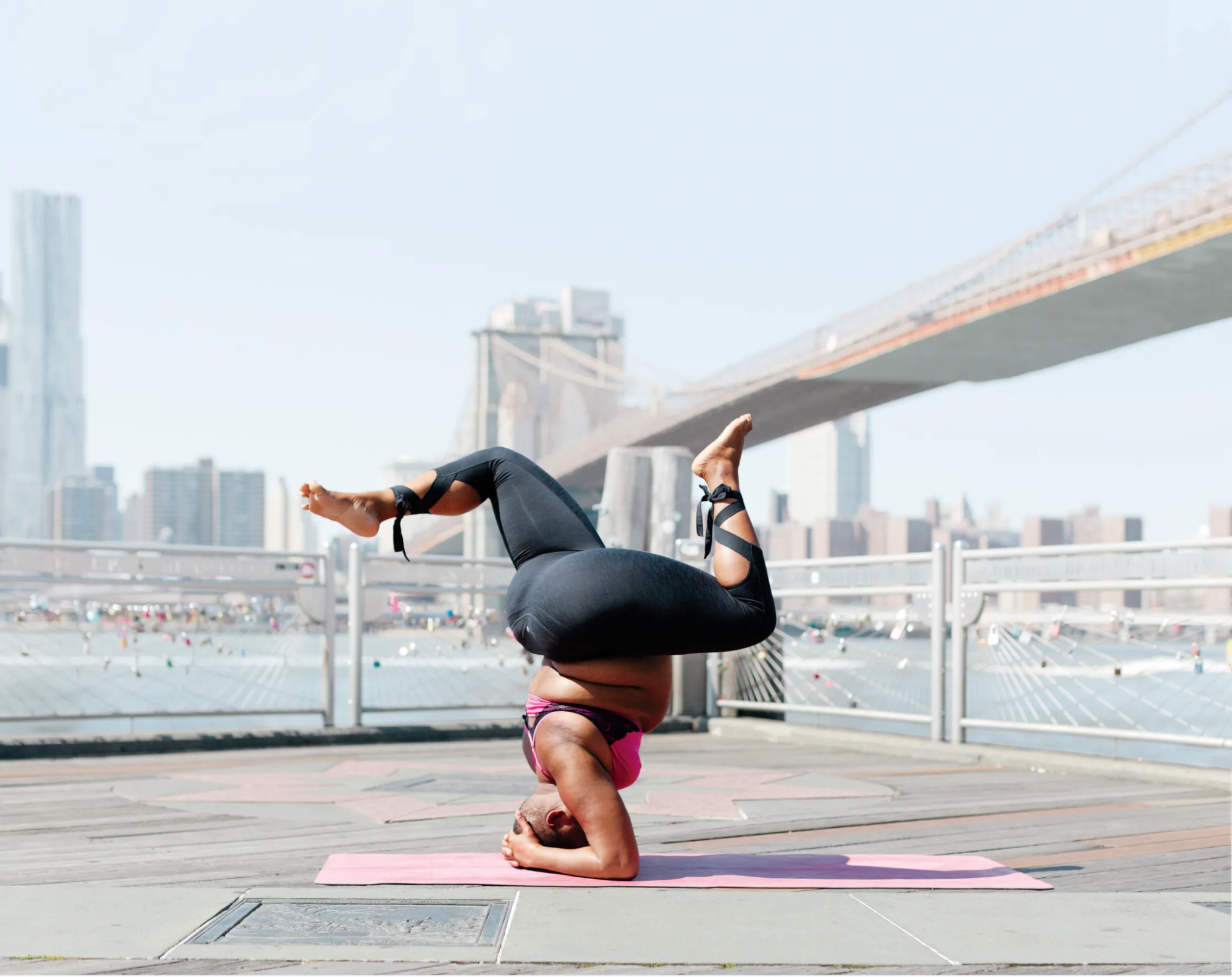
Image courtesy of Jessamyn Stanley
Listening to Your Body
As a last tip, remember this:
In yoga, you must listen to your body. It will be challenging and difficult, but it gets easier as your body grows stronger, more flexible, and more coordinated. If you push when your body is communicating to you through pain or discomfort, you will likely injure yourself. And when that happens, you might feel discouraged, decide to quit, and lose out on an opportunity to see what you are capable of.
Radhika Gupta of Satvic Yoga said, “all of our bodies are different. You do as much as your body can do right now. There’s no comparison–there’s no competition in yoga,” and “the beauty of yoga is you're getting the benefit no matter at what stage of practice you are."
Even doing something partway moves you closer to the goal. Listen to when your body warns you of your limits, trusting that you’ll grow beyond them soon.
Some of Radhika’s other teachings are:
“Here, the philosophy “no pain, no gain” doesn’t work.”
“This might be slightly challenging, so enjoy it!”
Akshaya Agnes of Move with Agnes, who has the smoothest and most relaxing voice, always ends the flow with gratitude:
“Thank you for taking the time to come back to your beautiful self.”
“...bow down to the mat today for this beautiful flow and all the things you were capable [of doing] in this class.”
And Annie Au of Yin Yoga with Annie has a phrase that I’d like to live my life by:
"You have nowhere to go,
nothing to do,
and nobody to be.”
In these quiet moments of doing yoga in my living room, I am learning how to listen to my body and feel grateful for all that it is capable of.
Conclusion
Here are some of the life lessons that I’ve learned from yoga:
Be gentle with yourself. Have grace for yourself when it feels challenging and when you miss days.
Let yourself slow down. It can be hard to stay still. But slow down, focus on your breathing, and be present in the moment.
Listen to your body. Your body will tell you what it needs, what feels good and what doesn’t. Pain speaks volume, as does the absence of pain.
Express gratitude. Say thank you to your body and the ways in which it is capable. Thank yourself for showing up and doing your best.
Yoga found me at a time when I was searching for some semblance of stability and a reason to get up in the morning. I am physically healthier and, perhaps for the first time in my life, am feeling gratitude for my body.
In this fast-paced world, taking care of ourselves in body, mind, and spirit is a must. Yoga can be the gateway to learning how to listen to your body and ground yourself in the present moment.
And if you’re thinking that yoga might not be for you, who knows? Give it a try–you might be surprised by the result.