

What Makes a Place Feel Like Home?
Community has become one of those words we use constantly but rarely stop to define. Though Lotus Magazine is a lifestyle media platform that primarily serves Asian American & Pacific Islander women, we’ve found that what our community is looking for has been evolving. Our community is looking for more than just a space that makes us feel seen. So what does it take now to create a sense of community and belonging? We caught up with Cynthia Huie, founder of On Waverly in San Francisco’s Chinatown—someone who has spent more than a decade learning alongside her community—to explore what building community looks like today.
Image courtesy of Andria Lo
The loneliness paradox
In our modern world, we are more connected than ever. A simple phone call to reconnect with a friend, a quick text message to remind your SO you’re thinking of them, a video call to celebrate a win with your family. Technology has handed us the tools to overcome physical distance, yet somehow we’ve created new kinds of distance. Most of us have experienced it: promising to grab coffee “soon” with a friend, only to realize months have quietly slipped by. We stay connected through notifications, group chats, and Instagram stories, yet somehow still feel isolated. Cynthia noticed it in her own community, too. “People lived here for years and didn’t know their neighbors.” In an increasingly connected world, we’re starved for authentic connection, and we may not even realize it or know what to do about it.
We can’t manufacture community
Most of us don’t think about why some places become part of our lives while others never do. Cynthia experimented throughout her years of engaging with community spaces. Events. Farmers markets. Opening her own spaces. She noticed something surprising: people rarely build community because they’re told to. They build it because certain conditions quietly make it possible. To bring people together, we need physical spaces to anchor ourselves. Think about where you typically gather with friends or community members. Whether it’s a neighborhood coffee shop, a public library, a church, or the local pickleball courts, these “third spaces”—places separate from home and work or school—give people opportunities to share experiences, form relationships, and cultivate community. Research continues to show that having access to third spaces plays an important role in reducing loneliness and fostering belonging.
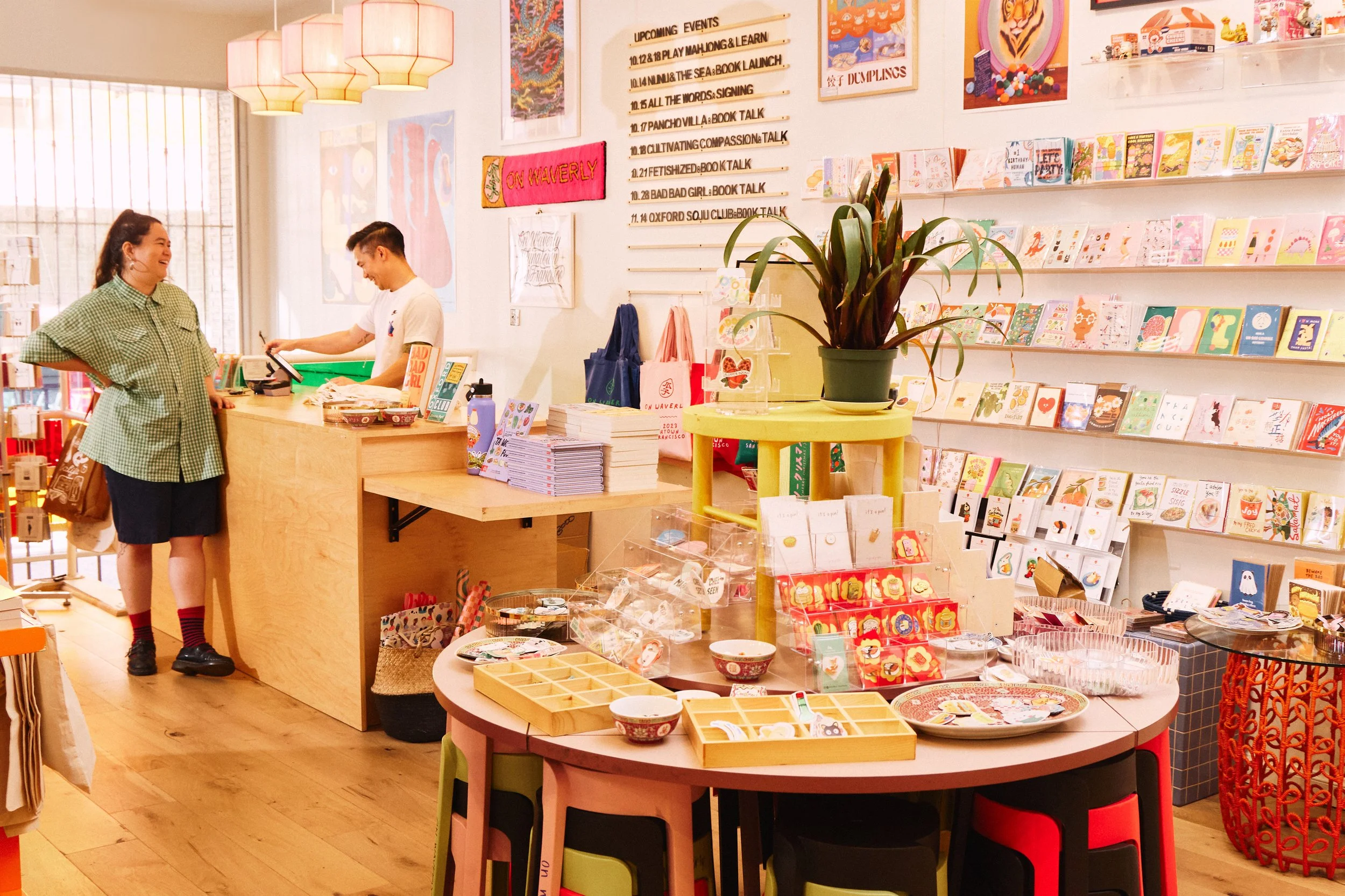
Image courtesy of Andria Lo
Fostering feelings of belonging
But wait, there’s more. More than just a physical space that welcomes you and makes you want to stay, there’s another ingredient that enhances our feelings of belonging. “When you call a friend, and you’re like, ‘Hey, let’s go get coffee,’ that’s one type of interaction, right? But when you actually go to get coffee, and then you run into somebody you know, that is a completely different feeling you have about your place in this world.” Perhaps you feel some sense of belonging and accountability in your neighborhood. The unplanned encounter creates feelings of connection beyond just the space itself. Suddenly, you feel recognized. You matter to someone beyond your immediate circle. Somehow, the edges of your circles have met, even ever so slightly. And what happens when the edges of your circle begin to overlap with many others, and those overlap with still others? Now, you’ve created community and belonging. This was what inspired On Waverly for Cynthia. She sought to establish conditions that allow interactions like this to be recreated. We challenge you to notice this in your life, too. Where do you find this kind of connection and belonging in your life, and how might you be able to create it for someone else?
Focus on what’s within your control
Cynthia believes authenticity isn’t about branding yourself—it’s about making decisions that stay true to your values, even as your community evolves. When we’re clear on our priorities, it becomes much easier to navigate the choices we make. More importantly, it allows us to let go. “I let a lot of energy go by not worrying about the outcome,” Cynthia says. “It would be a really hard challenge if I woke up each morning thinking, ‘I’m going to create community.’” Instead, she opts to focus on creating the conditions that encourage people to come out. This is a healthy perspective as we continue this evolving dialogue around community and our collective needs or desires change.
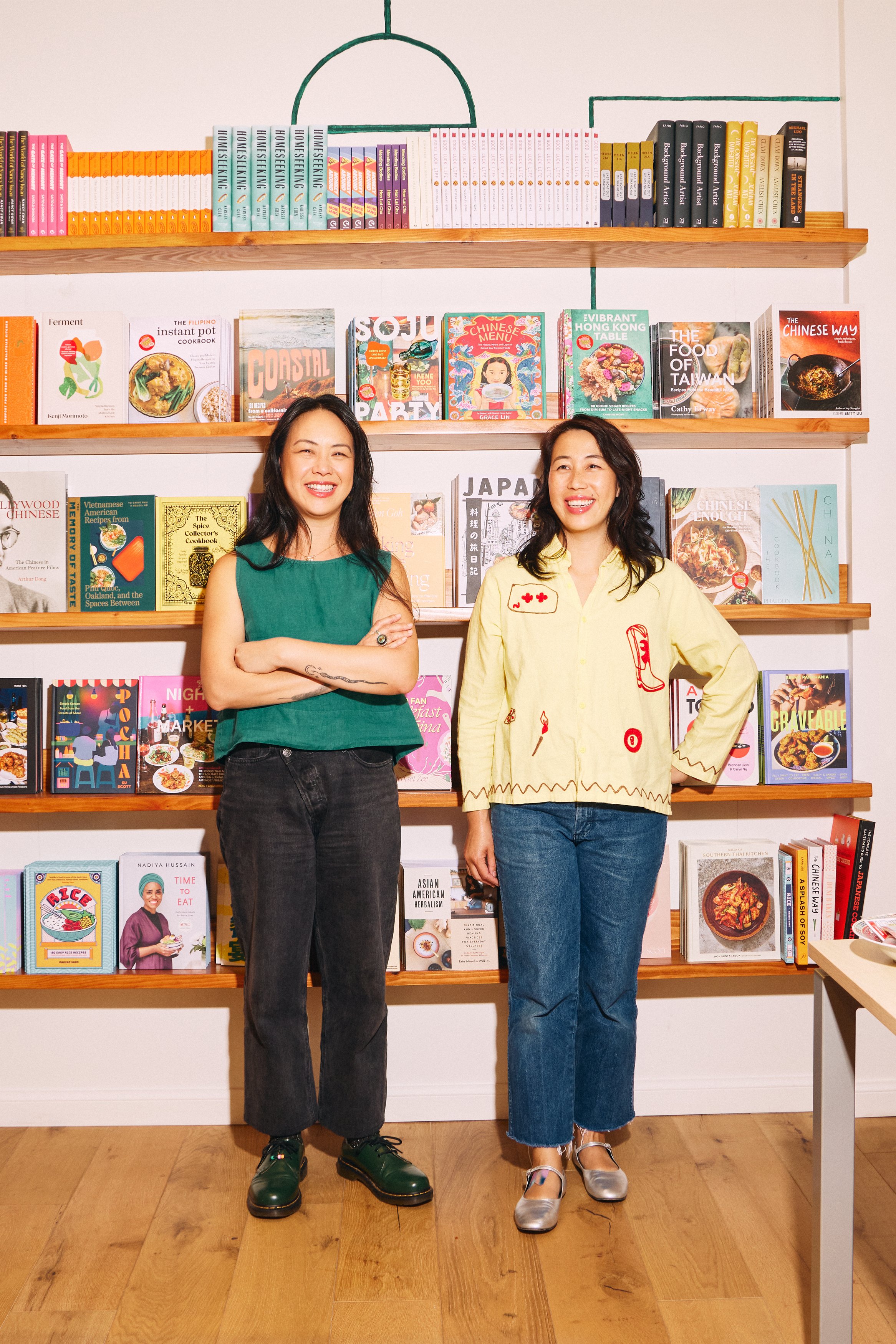
Cynthia Huie with sister and co-founder Jennifer Huie
Image courtesy of Andria Lo
A better world
As we navigate the intersection of culture, politics, economics, and individual experiences, we can’t help but wonder what the broader goal of building community looks like. Cynthia believes what we’re doing now is an important stepping stone. We’re learning to create community amongst ourselves, and in doing so, we’re building deeper self-awareness within ourselves. “Now, how do we expand that circle to start to include others? My hope is that other people are curious about Asian American history who are not Asian American, and we are equally as curious about their history, and we find opportunities for all of us to be together.” Indeed, here at Lotus Magazine, we’ve seen our own community become increasingly comfortable embracing a shared identity. We’re learning that the parts of ourselves we once felt pressure to hide don’t need to be hidden at all. As we continue building spaces where people feel seen, perhaps the next step is asking how we can widen that circle—creating places where kindness, curiosity, and belonging extend beyond our own communities and toward others, too.
About On Waverly
On Waverly is a bookshop, gift store and space in San Francisco's Chinatown, celebrating Asian American stories, local makers, and artists. The shop's upstairs Clubhouse hosts events, workshops, and gatherings that bring the community together.
About the Founder
Cynthia Huie is a San Francisco community builder and small business champion whose work has been rooted in strengthening neighborhoods for over a decade. She is co-founder and owner of On Waverly, a gift shop, bookstore, and community space in the heart of Chinatown. Previously, she co-founded Seedstore, a beloved Inner Richmond clothing shop known for championing emerging designers, makers, and artists. Cynthia is the President of the SF Small Business Commission and led the Clement Street Merchants Association for ten years — bringing the district its first parklet, a thriving farmers market, and neighborhood murals. With a background spanning retail, healthcare, and nonprofit board leadership, she has dedicated her career to advocating for small businesses and the diverse communities they serve.