

Re-Learning Taiwan: A Foggy Tale and the Untold History
My dad always told me, “Always vote–it’s a privilege to take part in democracy.” I didn’t understand when I was younger, because the right to vote was one I took for granted in the United States. As I got older, I began to try to learn. I envied my peers who could spend a summer tracing their heritage, learning through pictures and stories told from their parents and grandparents. But where was my family’s story? I had met my grandma a handful times as a child, so why didn’t she ever bother to share?
Since then, I’ve gathered bits and pieces of information over the years: the vast world of the Internet, intentional questions asked to my parents, curious visits to Taiwan as an adult, and, of course, pieces of media like A Foggy Tale (大濛) (2025). The revival of Taiwanese cinema over the past 20 years has generated pieces of artistic storytelling that examine this relatively recent history from perspectives that feel personal and relatable. Directed by Chen Yu Hsun, A Foggy Tale takes place during the 1950s, in the middle of the White Terror period (1949-1992). This was a period of martial law established by the Kuomintang, which, for the Taiwanese people and for many of the soldiers from China who believed they would soon return, was characterized by poverty, powerlessness, and violent silencing of perceived political dissidents, including journalists, thinkers, and activists.
In a story that honors both of these perspectives while highlighting the lives and stories of various characters finding ways to survive and exercise some agency amidst the oppression, the film took home four Golden Horse Awards (including Best Narrative Feature and Best Original Screenplay). Its critical acclaim is a testament to its ability to connect to broad audiences, including those like myself, who have felt disconnected from Taiwanese history but are now motivated to learn about the dark history our grandparents may have shelved.
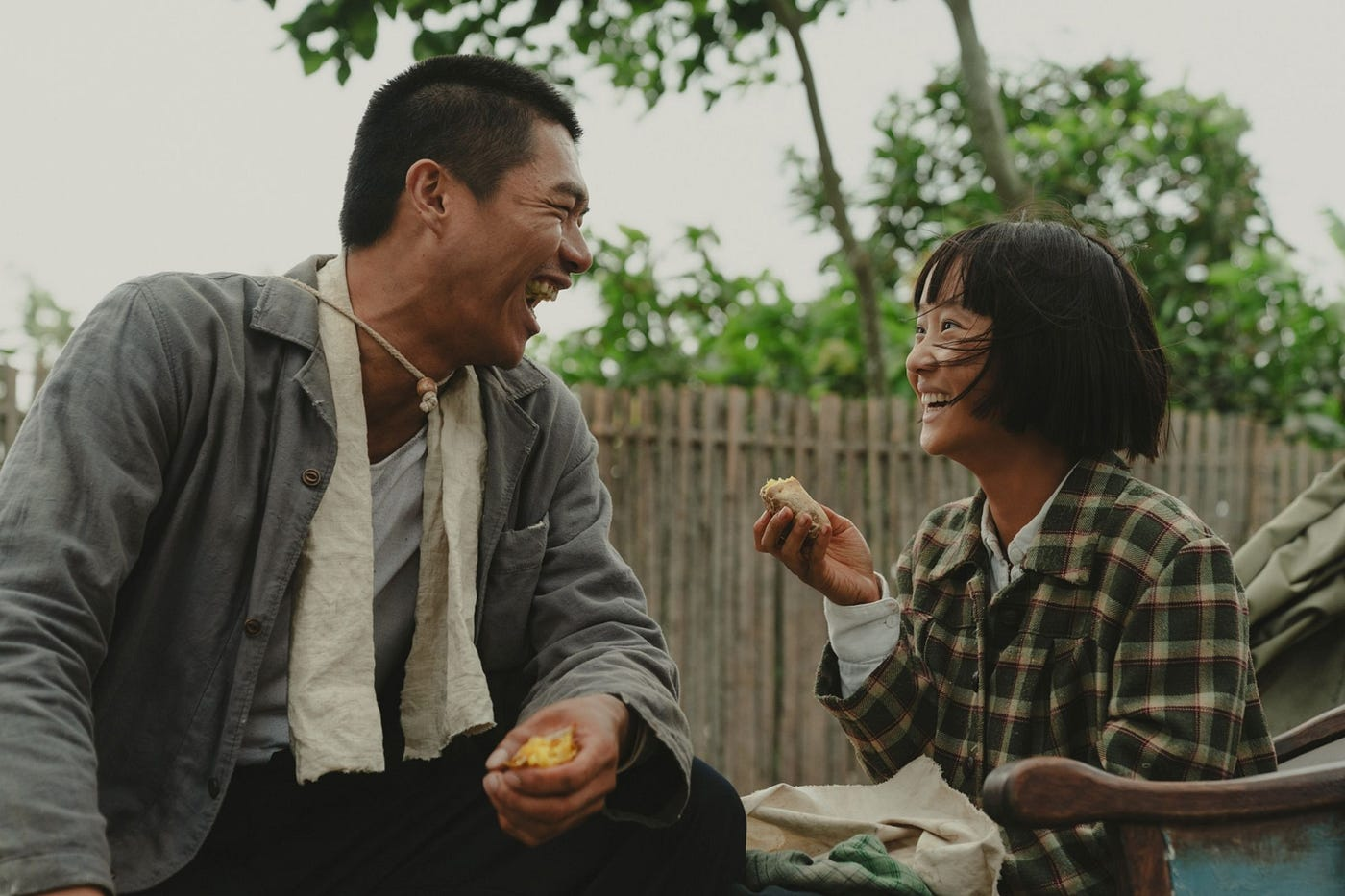
Film Still from A Foggy Tale 2025
The film follows a young teenage girl, Yue (Caitlin Fang), around the same age my grandma was in the 1950s, who travels from her home in rural Chiayi to Taipei to collect her older brother’s body after she learns he has been executed by the Kuomintang. The heartbreaking journey to do the only thing she believes she can do to preserve her brother’s dignity highlights the tenacity of someone who is likely among one of the most powerless groups of people–a young girl from a poor family. A kind of quiet, resilient courage that defined the survival of many during the time.
Upon arriving in Taipei, she encounters a variety of complicated characters and a vast moral gradient. She forges an unlikely friendship with Chao Kung-tao (Will Or), a foul-mouthed, rough-around-the-edges soldier from Guangdong who is still hoping to return home one day. Together, they search for ways–some questionable–to scrape together just enough money to buy her brother’s body from the funeral home, a price that costs a fortune for her impoverished family. They venture around a Taipei that looks almost familiar, with red brick buildings (which can still be seen in some parts of modern Taipei) and street names that might ring a bell, but this Taipei is filled with dust, bicycles, oxen, and small, narrow alleys. But perhaps most accessible of all to audiences like me is the personable characters: many of us can relate to friendship, the kindness of strangers, and childhood naivete.
The story helps color in some of the gaps that simply reading the history misses. Especially as the film’s portrayal of Yue’s story progresses beyond her harrowing journey to Taipei, we realize she is actually alive today: not in a literal sense, but in our grandparents, who are still actively carrying the trauma and anxiety of the recent past and have found their own ways of moving forward.
Creation and access to films like A Foggy Tale, are essential to ensuring that these stories are remembered. They are also important to helping younger generations of Taiwanese people connect the dots and answer our questions about our own heritage and identity. As a part of the Taiwanese diaspora, I feel fortunate to see that A Foggy Tale is being shown around the US, including in San Diego this weekend at Pacific Arts Movement’s San Diego Asian Film Festival Spring Showcase (April 24-26). My hope is that we can keep learning these stories, because they deserve to be honored and kept alive.