
Lunar New Year Traditions: Food
I love food… but who doesn’t?! Something ubiquitous among most, if not all, Asian cultures is that love and affection from parents are usually expressed through the sharing of food, love and affection from parents is usually expressed through food. In my household, offering a plate of cut fruit is the same as saying “I love you.” Food acts as the bridge connecting us to our parents and their upbringing. In sharing with us what they loved to eat growing up, we not only help to pass their traditions down with us, but also we get a looking glass into what their lives were like before we came into the picture. For Chinese Americans, and many other Asian Americans, Lunar New Year can be equated to the traditional American Thanksgiving, where the whole family will gather to eat together and usher prosperity into the New Year. If there’s one holiday my parents went all out for every year growing up, it was definitely Lunar New Year.
To welcome in the New Year, families will have a “Nian Ye Fan” 年夜飯 on New Year’s Eve. This roughly translates to “the New Year’s Eve reunion meal.” Every dish served is a symbol meant to usher in wealth, luck, and prosperity in the New Year. While the ingredients may shift across cultures, the intention behind each food served remains the same: a prayer, an offering, a wish for an auspicious year..
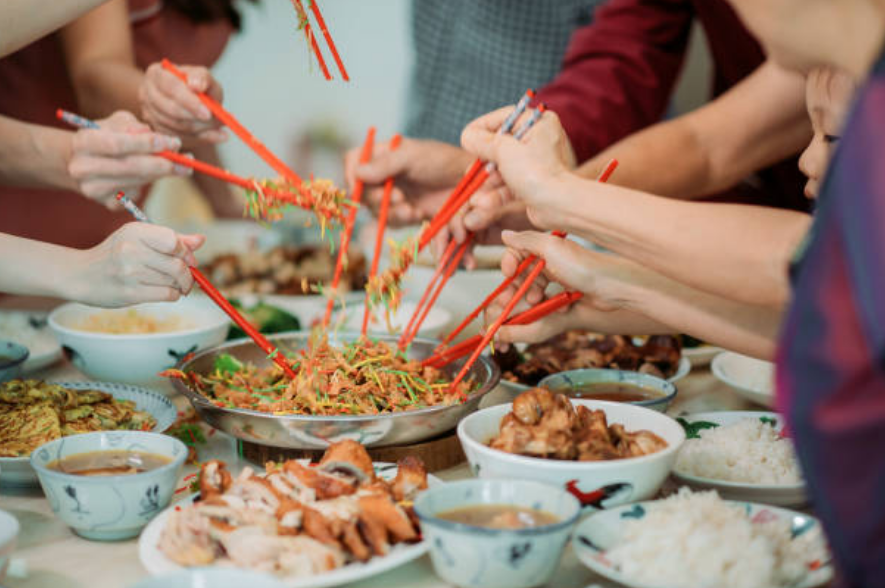
Image courtesy of Marcus Chung
If you’re celebrating Lunar New Year or happen to be invited to a “Nian Ye Fan,” here’s a quick cheat sheet of popular Lunar New Year foods and what they mean:
Rice cakes represent a “stickiness” of family bonds and family togetherness.
China (Nian Gao): A literal translation of "higher year," promising growth
Extra fun fact: nian gaos can be both sweet or savory!
Vietnam (Bánh Tét): Cylindrical cakes wrapped in banana leaves
Korea (Tteok): The foundation of the traditional soup, Tteokguk
Philippines (Tikoy): A sweet, sticky treat
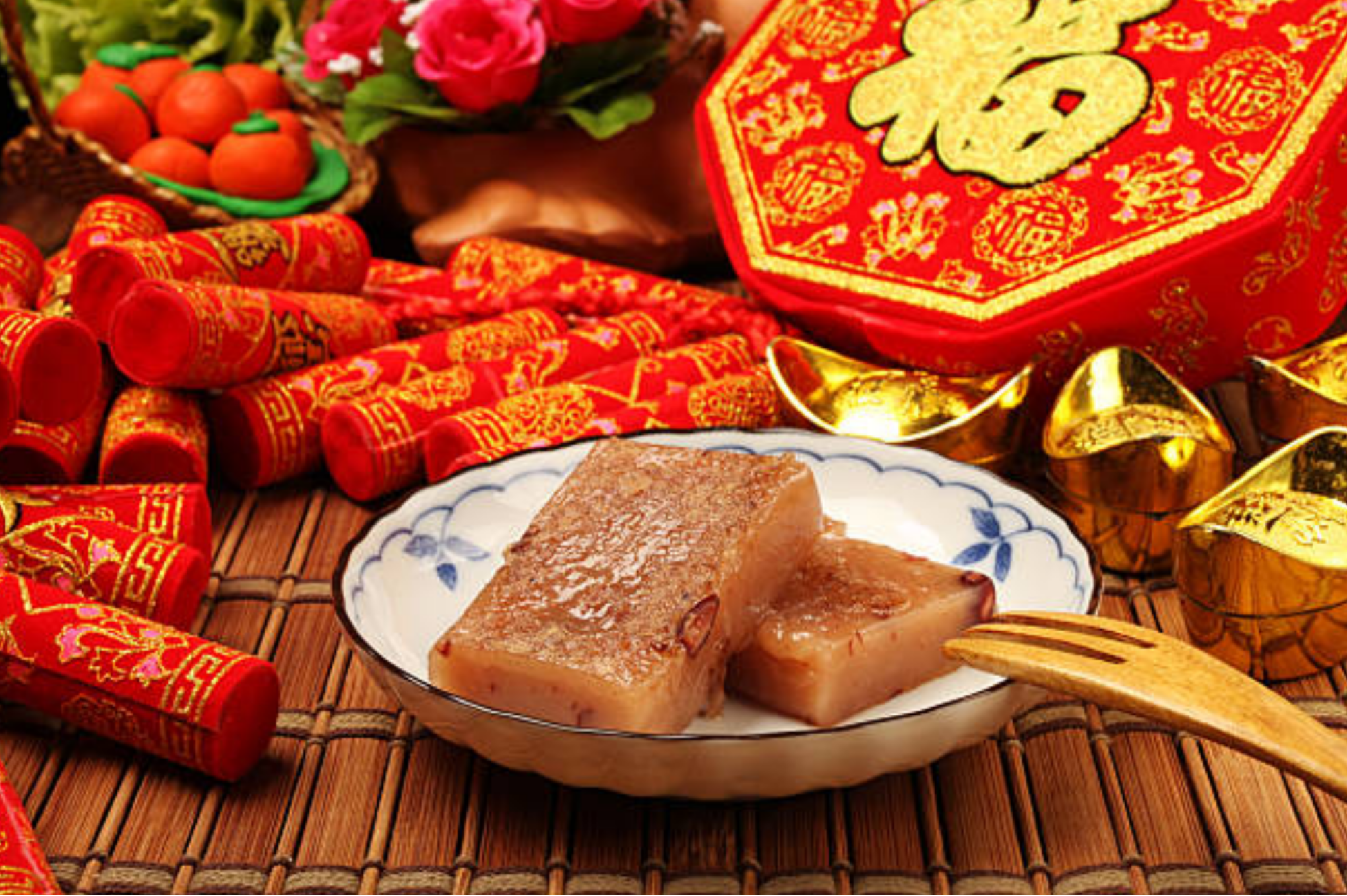
Sweet red bean rice cake
Image courtesy of Lcc54613
Dumplings are seen as “nuggets of wealth” based on their shape.
China (Jiaozi): Shaped like ancient silver ingots.
Vietnam (Nem Rán): Spring rolls
Korea (Mandu): Plump pockets
Philippines (Lumpia): Golden like gold bars
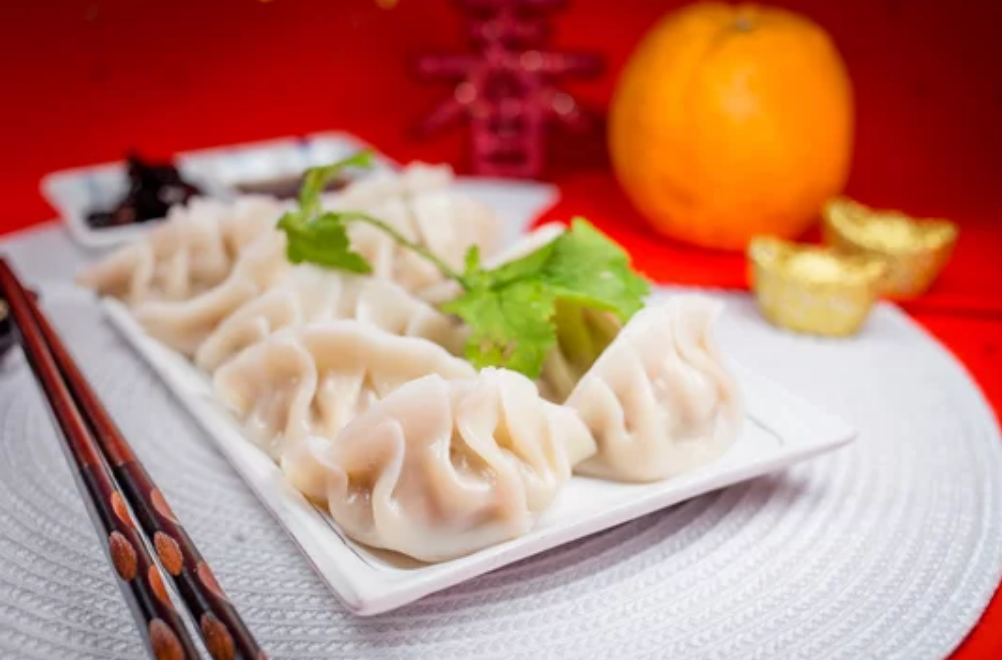
Image courtesy of Chenyu
The length of noodles means longevity and vitality. Remember to never cut your noodles!
China (Changshou Mian): Translated as “long life noodles”
Vietnam (Mì/Hủ Tiếu): Mi are egg noodles that are served to symbolize flourishing life
Korea (Janchi-guksu): “Feast noodles”
Philippines (Pancit): Pancit are just one type of noodles eaten during the New Year that represent long life and good health
Bonus fun fact!
A whole fish at the dinner table represents abundance and surplus into the new year while a whole chicken symbolizes unity and completeness. Serving the animal whole symbolizes the family remaining whole for the upcoming year.
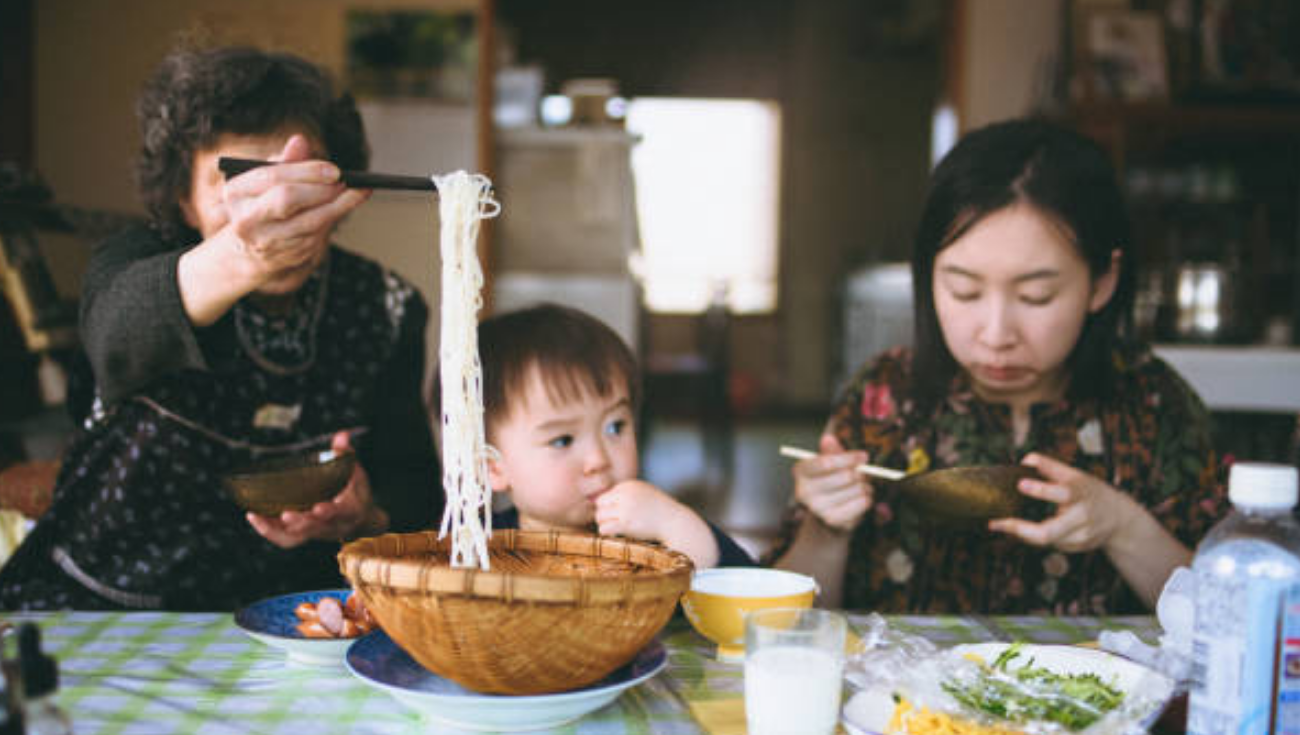
Image courtesy of PLASTICBOYSTUDIO
What do you and your family do for the Lunar New Year? Do you have a unique experience you'd love to share with us? DM us @lotus_mag for a chance to have your story spotlighted! Here are some ways our staff members at Lotus Mag will be celebrating:
“My family is from Taiwan - we make steamed glutinous rice meatballs (zhēn zhū wán zi), or Pearl Balls) by hand together as an activity, and then we usually do a potluck of things. It usually encompasses a bunch of dishes like steamed fish, rice meatballs, water spinach, shrimp, and noodles. We also give out red envelopes with chocolate coins, but as my nephews get older, I’ll be giving them $2 bills and then later $8, and then I’ll increase it eventually once they get older and need to start thinking about college”
“My family loves to make dumplings! We have a family recipe that we've been following for years and it's such a fun activity that has everyone participating around the table. There's usually a lot of chatter, laughter, and joy, and most importantly, it's time spent together being fully present.”
“My family loves to do dumplings too! This year, my friends and I are making tang yuan from scratch!”
“I grew up celebrating Lunar New Year with my small nuclear family, and it was always very intimate. Now, Lunar New Year is something I celebrate with my extended family -- my friends and their family members that have welcomed me into their community when I couldn't always go home to see mine. My best friend's mom wakes up at 6am every Lunar New Year to prepare a traditional 10-course feast, and I like to take the leftovers to make a stew or stir fry for myself after the big celebration is over!”
